


Why We Should Look For Branded Ingredients In Supplements
Two supplements can list the same ingredient while differing in source, processing, consistency and quality control. This is why consumers and supplement manufacturers should look beyond the ingredient name when comparing products.
A branded ingredient can make it easier to identify who produced it, where it came from and which standards support it. However, the value of a branded ingredient extends beyond its trademark. It comes from traceability, defined production methods, technical expertise, relevant research and reliable testing.
For astaxanthin, these details are especially important because its source and production process can affect the characteristics and consistency of the finished ingredient.
What Is a Branded Supplement Ingredient?
A branded ingredient is a proprietary raw material identified by a specific name, often accompanied by a ™ or ® symbol.
Depending on the producer, a branded ingredient can provide:
-
A clearly identified biological source
-
Controlled cultivation and processing
-
Defined ingredient specifications
-
Batch testing and traceability
-
Research relevant to the specific material
-
Quality, purity and stability documentation
A generic ingredient is usually listed only by its common name. This does not automatically make it lower quality, but manufacturers and consumers may receive less information about its origin, production process or supporting evidence.
Why Ingredient Identity Matters
Scientific evidence applies most directly to the ingredient that was actually studied.
Materials sharing the same general name can differ in source, concentration, composition and processing. Research conducted on one branded ingredient should not automatically be applied to another material unless the two have been shown to be comparable.
When assessing a supplement, it is helpful to look for alignment among:
-
The ingredient used in the research
-
The ingredient identified on the product label
-
The active amount provided per serving
This alignment helps manufacturers, healthcare professionals and consumers determine how closely the supporting science relates to the finished product.
What This Means for Astaxanthin
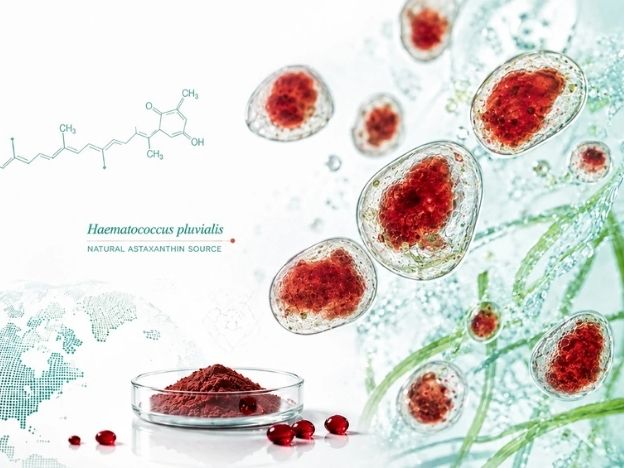
Astaxanthin is a red carotenoid available from natural and synthetic sources. Natural astaxanthin used in dietary supplements is commonly derived from the microalga Haematococcus pluvialis.
A transparent astaxanthin product should clearly identify:
-
Whether the astaxanthin is naturally sourced
-
Whether it is derived from Haematococcus pluvialis
-
The amount of active astaxanthin per serving
-
The producer or ingredient source
-
The manufacturing and testing standards applied
These details help manufacturers and consumers understand the type of astaxanthin they are evaluating rather than relying on a broad ingredient name alone.
What Is AlgaeAsta®?
AlgaeAsta® is our premium natural astaxanthin ingredient. As a Canadian biotechnology company specializing in microalgae and astaxanthin, we developed AlgaeAsta® to provide a clearly identified and traceable natural source.
AlgaeAsta® is derived from Haematococcus pluvialis. Under environmental stress, this microalga naturally accumulates astaxanthin as part of its protective response. Through controlled cultivation and processing, the carotenoid is prepared for use in dietary supplements.
The AlgaeAsta® name connects the ingredient directly to our expertise in microalgae cultivation, cell disruption, extraction, testing and quality control. It provides greater sourcing transparency than a specification that identifies the material only as “astaxanthin.”
The Principles Behind AlgaeAsta®
Canadian astaxanthin expertise
We specialize in researching and developing microalgae-derived ingredients in Canada. Our experience supports an integrated approach that connects ingredient development, cultivation, processing, formulation and quality evaluation.
Natural microalgae sourcing
We derive AlgaeAsta® from Haematococcus pluvialis rather than a synthetic astaxanthin source. Identifying the organism allows manufacturers and consumers to understand the ingredient’s natural origin.
Ingredient traceability
A named ingredient makes it easier to trace astaxanthin through cultivation, processing, testing and manufacturing. It also distinguishes AlgaeAsta® from materials supplied without clearly identified sourcing or production information.
Controlled processing
Producing astaxanthin involves more than cultivating microalgae. Cell disruption and extraction are essential steps for recovering astaxanthin from the resistant cell structure of Haematococcus pluvialis. We apply defined production controls throughout these stages to help maintain the ingredient’s identity, purity and consistency.
Batch-to-batch consistency
Controlled production and established specifications help us maintain consistency between batches. This is important for supplement manufacturers because variations in raw materials can affect formulation, stability and finished-product quality.
Quality Goes Beyond the Ingredient Name
A well-documented ingredient must still be supported by appropriate formulation, manufacturing, packaging and finished-product verification.
We apply a comprehensive quality-control system to our astaxanthin ingredients and formulations. Production lots undergo more than 80 tests and quality checks covering microbial quality, heavy metals, ingredient specifications and microalgae-specific parameters.
Third-party testing provides additional verification, while GMP manufacturing supports controlled and documented production practices. Active concentration, delivery format, stability and packaging must also be considered when protecting quality throughout the product lifecycle.
AlgaeAsta® is used in Astadaily supplements, connecting our ingredient expertise with finished products formulated to deliver natural astaxanthin.
Conclusion
Branded ingredients can give supplement manufacturers and consumers greater insight into where an ingredient comes from, how it is produced and which quality systems support it. Their value is built on more than a proprietary name. It depends on traceable sourcing, defined specifications, technical expertise, consistent production and reliable testing.
We developed AlgaeAsta® in Canada as a natural astaxanthin ingredient derived from Haematococcus pluvialis. Supported by our specialized microalgae expertise, GMP manufacturing, third-party testing and more than 80 quality checks, AlgaeAsta® reflects our commitment to science, transparency and consistent ingredient quality.