


Whether you’re an office worker spending hours in front of a computer or an avid reader flipping through pages late into the night, you likely wonder about the long-term impact on your eyes. Here’s a question we often hear: “Can I do something to protect my eyesight?” The answer is a resounding yes! One powerful ally in maintaining optimal vision health is astaxanthin, a naturally occurring carotenoid found in algae, salmon, and lobster. But you don’t have to take our word for it. Recent clinical trials are beginning to paint a fascinating picture of how astaxanthin works to support your vision. Let’s dive into the science.
Study Insights: Astaxanthin for Vision Health
The table below summarizing the four human clinical studies of astaxanthin for vision health provides valuable insight into the potential benefits of this carotenoid for maintaining and enhancing ocular function.
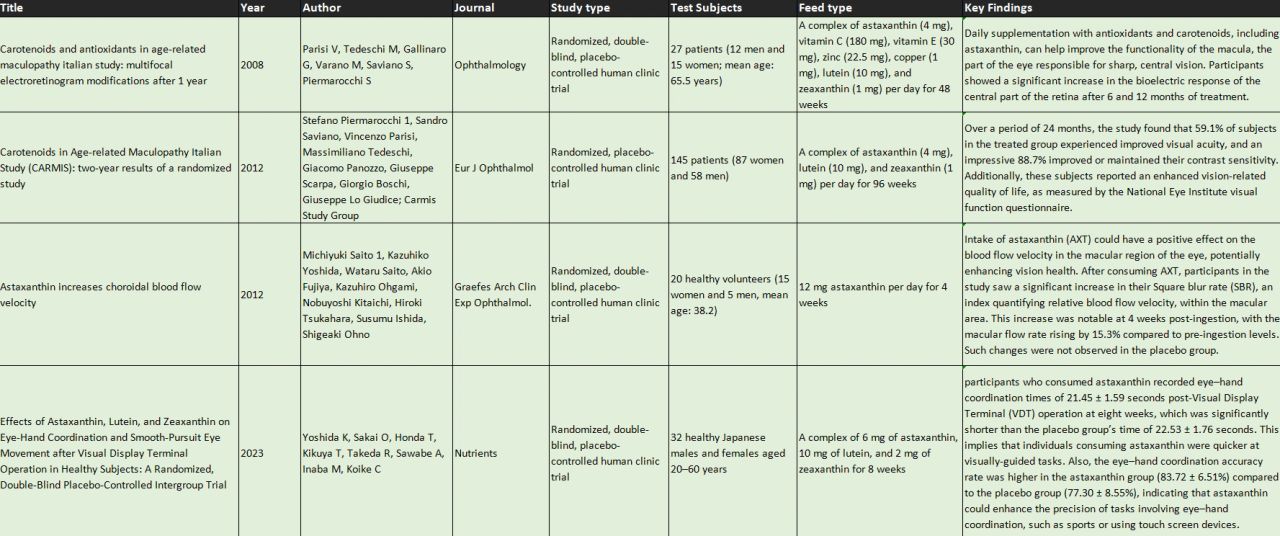
These human clinical studies suggest that daily supplementation with astaxanthin, especially when combined with other carotenoids like lutein, can be a powerful strategy to support and maintain your vision health.
1. Improved Macular Function ( Parisi et al., 2008 )
Do you have early-stage age-related macular degeneration (AMD)? If so, the research titled “Carotenoids and Antioxidants in Age-Related Maculopathy Italian Study: Multifocal Electroretinogram Modifications after 1 Year” conducted in 2008 may be quite enlightening. In this double-blind, placebo-controlled trial, 27 participants averaging 65.5 years old were administered a daily supplement mixture of astaxanthin, vitamins C and E, zinc, copper, lutein, and zeaxanthin for 48 weeks. The study highlighted that this combination of antioxidants and carotenoids, with 4mg astaxanthin included, notably enhanced the function of the macula, the part of our eyes that governs detailed, sharp vision. A marked increase in the bioelectric response of the retina’s central area was recorded after six and twelve months of treatment.
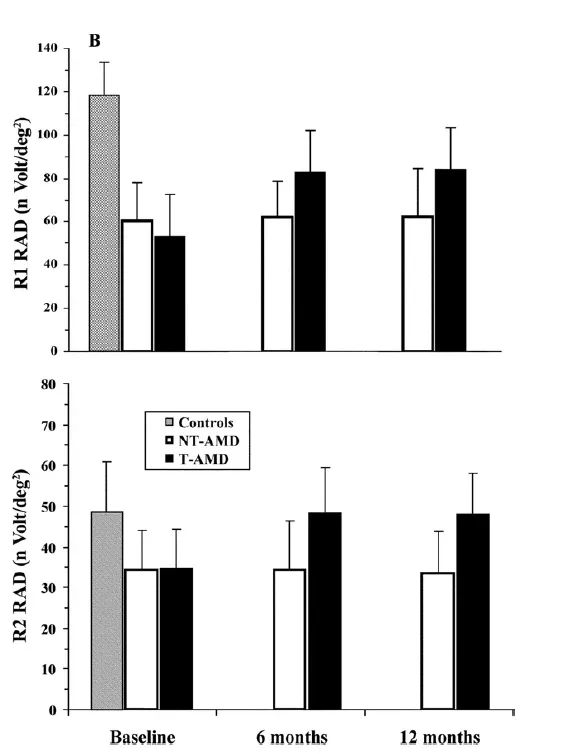
This study holds substantial implications for individuals with AMD, a prevalent eye condition in people over 60 that can lead to a decrease in central vision sharpness, impacting abilities like reading, driving, or face recognition. The findings suggest that if you’re grappling with early-stage AMD, incorporating a daily regimen of supplements, including astaxanthin and other antioxidants, could potentially aid in preserving or even boosting your central vision. Such an improvement can significantly enhance the quality of life, letting you carry out daily activities without struggle.
2. Enhanced Visual Acuity and Quality of Life ( Piermarocchi et al., 2012 )
If you’re worried about preserving your sight and maintaining a high quality of life, “Carotenoids in Age-related Maculopathy Italian Study (CARMIS): Two-Year Results of a Randomized Study” could provide some essential insights. Published in 2012, this trial involved 145 patients who were administered a daily supplement complex of astaxanthin, lutein, and zeaxanthin for 96 weeks. Impressively, after this 24-month period, a significant percentage of the treated subjects (59.1%) displayed improved visual acuity, which refers to sharpness or clarity of vision. Even more promising, almost nine out of ten subjects (88.7%) either improved or at least maintained their contrast sensitivity, an essential factor for distinguishing objects from their background.
The benefits of this carotenoid-rich supplementation regimen extend beyond just biological measures. The study also demonstrated improvements in vision-related quality of life as per the National Eye Institute’s visual function questionnaire. Age-related macular degeneration (AMD), the primary concern of these studies, can significantly hamper a person’s ability to perform everyday tasks, from reading to recognizing faces or driving. Poor visual acuity and contrast sensitivity can make these challenges even more substantial. As such, the findings of this study suggest that individuals dealing with AMD could greatly benefit from a daily supplement regimen that includes astaxanthin, lutein, and zeaxanthin. Improved or maintained vision, in turn, can contribute to a higher quality of life, ensuring you remain independent and able to carry out your daily tasks without hindrance.
3. Increased Blood Flow to the Eyes ( Saito et al., 2012 )
Ever considered the role blood flow plays in maintaining the health of your eyes? “Astaxanthin Increases Choroidal Blood Flow Velocity” is a study that draws attention to this often overlooked aspect. Published in 2012, this clinical trial involved 20 healthy volunteers who consumed 12 mg of astaxanthin daily for four weeks. It demonstrated that regular intake of astaxanthin could significantly increase the blood flow velocity in the macular region of the eye, an area vital for central vision. This effect was evidenced by a marked increase in the Square Blur Rate (SBR), an index that quantifies relative blood flow speed. A 15.3% rise in macular flow rate was observed four weeks after astaxanthin ingestion, highlighting the potential of this carotenoid in supporting eye health.
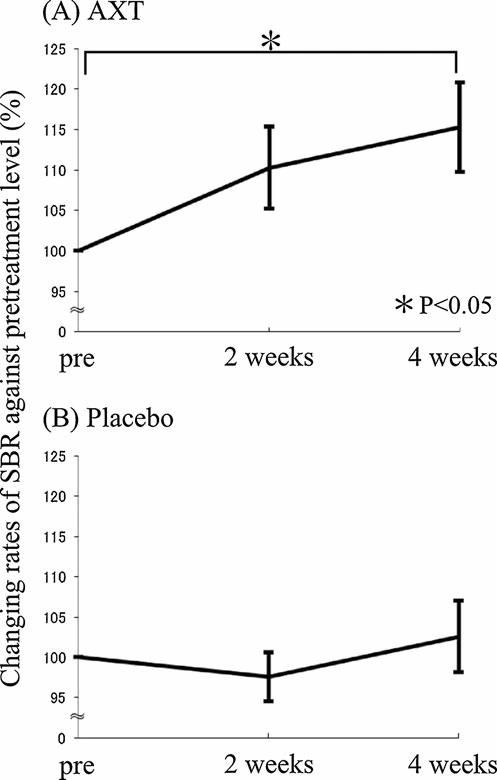
Why is this relevant to you? Blood flow to the eye, specifically the choroid – a layer of the eye responsible for oxygen and nutrient supply – is crucial for maintaining good eye health and preventing diseases like age-related macular degeneration (AMD) and glaucoma. Low choroidal blood flow has been linked to these conditions, which can seriously impair vision. The ability of astaxanthin to improve choroidal blood flow velocity can thus potentially mitigate the risk of these diseases, contributing to better vision health. Through increasing the blood flow velocity in the macular region, astaxanthin supplementation could provide a straightforward, non-invasive approach to maintain optimal eye health.
4. Better Eye-Hand Coordination ( Yoshida et al., 2023 )
Visual Display Terminals (VDTs), including computer monitors and other digital screens, are a significant part of many people’s lives in our increasingly digital world. However, long-term VDT use can affect eye-hand coordination, which can impact daily activities. Fortunately, a recent study, “Effects of Astaxanthin, Lutein, and Zeaxanthin on Eye-Hand Coordination and Smooth-Pursuit Eye Movement after Visual Display Terminal Operation in Healthy Subjects: A Randomized, Double-Blind Placebo-Controlled Intergroup Trial,” published just two months ago, provides new insights. In this study, 32 healthy Japanese adults consumed a supplement containing 6 mg of astaxanthin, 10 mg of lutein, and 2 mg of zeaxanthin daily for eight weeks.
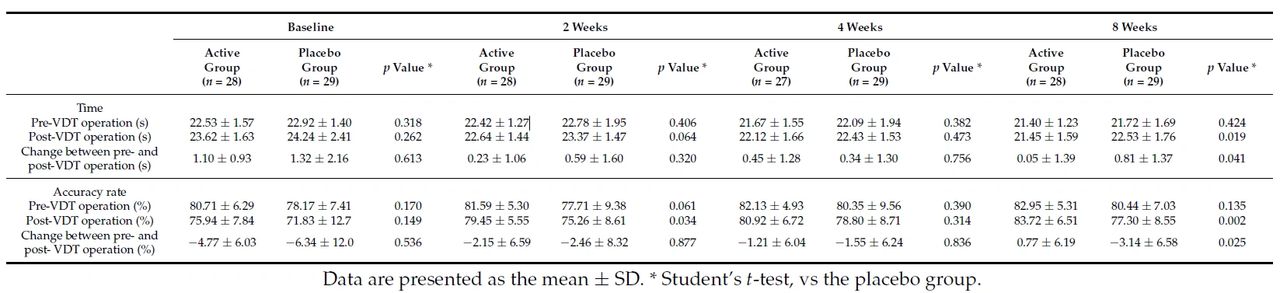
The findings from this study showed that the group supplementing with astaxanthin, lutein, and zeaxanthin demonstrated significantly better eye-hand coordination times and accuracy rates compared to the placebo group post-VDT operation. Specifically, participants in the supplement group recorded eye–hand coordination times of 21.45 ± 1.59 seconds, compared to 22.53 ± 1.76 seconds in the placebo group. This suggests that individuals supplementing with astaxanthin and other nutrients could perform visually guided tasks more rapidly. Moreover, their eye-hand coordination accuracy rate was higher (83.72 ± 6.51%) than the placebo group (77.30 ± 8.55%), implying that the supplements could enhance precision in tasks requiring eye-hand coordination, such as sports or using touchscreen devices. These findings add to the mounting evidence on the benefits of astaxanthin, lutein, and zeaxanthin for eye health, especially for those who use VDTs regularly.
Decoding the Science: How Does this Benefit Me?
Having dissected and analyzed these four clinical studies, we’re now in a better position to answer some of the common questions regarding astaxanthin and its potential benefits for vision health.
- Q: What’s the recommended daily intake of astaxanthin for vision health? A: Dosages in the studies we analyzed varied, with subjects taking anywhere between 4mg to 12mg of astaxanthin per day.
- Q: How soon can I expect to see effects from astaxanthin supplementation? A: The response time can differ based on the specific effect. For instance, an increase in macular flow rate by 10.3% was noticed as quickly as 2 weeks into supplementation in one study. On the other hand, improvements in eye-hand coordination were measured after 8 weeks.
- Q: Did the subjects in these clinical studies resemble a broad demographic range? A: Yes, the studies included a wide range of subjects – from healthy volunteers to patients with vision health issues, from 20 to 145 subjects covering both men and women, with ages spanning from early 20s to 70s.
- Q: For how long can I continue astaxanthin supplementation according to these studies? A: The duration of astaxanthin supplementation in the studies ranged from a brief period of 4 weeks to as long as 96 weeks. However, it’s important to consult with a healthcare provider to determine what’s best for your individual needs.
- Q: Are there any side effects if I consume astaxanthin daily? A: Based on the clinical studies we reviewed, astaxanthin appears to be well-tolerated and safe for daily consumption. One of the studies conducted over a period of 96 weeks reported no significant systemic or ocular adverse events related to astaxanthin supplementation. However, as with any supplement, it’s always recommended to consult with a healthcare provider.
- Q: What supplement is recommended for improving blurry vision based on these studies? A: The studies suggest that a supplement containing a complex of astaxanthin, other carotenoids such as lutein, and zeaxanthin can be beneficial for blurry vision. However, it’s crucial to consult with a healthcare provider for personalized advice.
Additional Insights: The Source of Astaxanthin and Its Synergy with Other Carotenoids
One interesting fact we noticed while dissecting these studies was the source of astaxanthin. Two of the studies specifically mentioned using natural astaxanthin derived from microalgae Hematococcus pluvialis. The two studies from the Italy group utilized astaxanthin from AZYR SIFI, Catania, Italy but did not specify the source. Three of these clinical studies used a complex containing astaxanthin, while one study used astaxanthin alone.
This leads us to an important point to consider when choosing an astaxanthin supplement – the source matters. Natural astaxanthin derived from microalgae has been found to be more potent and effective than the synthetic version.
Also, these studies clearly indicate that astaxanthin doesn’t work in isolation. In fact, it seems to work best in conjunction with other carotenoids, like lutein. While we can’t conclude from these studies whether astaxanthin is better than lutein for vision health, astaxanthin does hold the higher ground in terms of antioxidant capacity. So, it’s safe to say that for maximum vision health benefits, a supplement combining astaxanthin with other carotenoids might be the best approach.
Unraveling the Science: Astaxanthin and You

Having combed through the research, we now address the key question: “What implications do these findings have for me?” If you are an individual who spends lengthy periods reading or working on digital screens, or simply someone seeking to preserve optimal vision health, these studies suggest that astaxanthin could be an important part of your wellness routine. Astaxanthin has demonstrated a range of potential benefits, from bolstering the functionality of your eye’s critical structures to improving precision in visually-guided tasks.
Nonetheless, while the body of evidence supporting astaxanthin’s beneficial role in vision health is growing, maintaining a balanced diet, taking regular screen breaks, and having periodic check-ups with your eye doctor remain essential. Your vision, a crucial asset, warrants dedicated care.
When seeking a supplement that aligns with the clinical study results, consider options that provide a comprehensive blend of beneficial ingredients. For instance, AstaDaily All-in-One, a product developed by scientists from the University of Toronto and licensed by Health Canada, encompasses nine active components – astaxanthin, lutein, blueberry extract (anthocyanin), resveratrol, biotin, vitamin C, vitamin E, Zinc, and fish oil (omega-3). This combination mirrors the ingredient profiles of the supplements used in the discussed studies, offering a balanced approach to support overall wellness, particularly eye health.
In Conclusion: Astaxanthin – A Potential Ally for Your Vision Health
The scientific findings surrounding astaxanthin are truly stimulating. Rarely do we encounter such persuasive data attesting to the benefits of a natural compound for vision health. But astaxanthin’s promise isn’t confined to vision alone. This potent antioxidant offers a broad spectrum of potential benefits – from contributing to skin health and aiding athletic performance to supporting vision health.
With each new clinical trial that we decipher, and the insights we glean, the potential of astaxanthin to revolutionize vision health becomes increasingly apparent. From preserving optimal macular function, enhancing visual acuity, and improving ocular blood flow, to boosting eye-hand coordination, astaxanthin appears to be a comprehensive ally for our eyes.
In our next post, we will dive into the effects of astaxanthin on skin health. Can this potent antioxidant help combat wrinkles or improve skin hydration? Stay tuned to find out. Until then, here’s to clear vision and healthy eyes!
Reference
1. Parisi V, Tedeschi M, Gallinaro G, Varano M, Saviano S, Piermarocchi S; CARMIS Study Group. Carotenoids and antioxidants in age-related maculopathy italian study: multifocal electroretinogram modifications after 1 year. Ophthalmology. 2008 Feb;115(2):324-333.e2. doi: 10.1016/j.ophtha.2007.05.029. Epub 2007 Aug 22. PMID: 17716735.
2. Piermarocchi S, Saviano S, Parisi V, Tedeschi M, Panozzo G, Scarpa G, Boschi G, Lo Giudice G; Carmis Study Group. Carotenoids in Age-related Maculopathy Italian Study (CARMIS): two-year results of a randomized study. Eur J Ophthalmol. 2012 Mar-Apr;22(2):216-25. doi: 10.5301/ejo.5000069. PMID: 22009916.
3. Saito M, Yoshida K, Saito W, Fujiya A, Ohgami K, Kitaichi N, Tsukahara H, Ishida S, Ohno S. Astaxanthin increases choroidal blood flow velocity. Graefes Arch Clin Exp Ophthalmol. 2012 Feb;250(2):239-45. doi: 10.1007/s00417-011-1843-1. Epub 2011 Nov 10. PMID: 22072378.
4. Yoshida K, Sakai O, Honda T, Kikuya T, Takeda R, Sawabe A, Inaba M, Koike C. Effects of Astaxanthin, Lutein, and Zeaxanthin on Eye-Hand Coordination and Smooth-Pursuit Eye Movement after Visual Display Terminal Operation in Healthy Subjects: A Randomized, Double-Blind Placebo-Controlled Intergroup Trial. Nutrients. 2023 Mar 17;15(6):1459. doi: 10.3390/nu15061459. PMID: 36986186; PMCID: PMC10054128.