


Introduction
In the world of skin health, a potent antioxidant is making waves. Astaxanthin, a naturally occurring carotenoid, is garnering attention for its impressive potential in skincare and anti-aging. As an antioxidant, it’s a defender against free radicals – the unstable atoms that contribute to skin aging and diseases. But what does the science say about Astaxanthin and skin health? In this blog post, we’ll dive deep into the evidence from recent human clinical studies.
Does Astaxanthin Really Improve Skin Health?
Astaxanthin, a carotenoid derived from microalgae, has long been recognized for its potent antioxidant properties. For a more comprehensive look at what Astaxanthin is and its general benefits, we invite you to visit our what is astaxanthin blog. But today, we are here to specifically discuss the scientific evidence pointing towards Astaxanthin’s benefits for skin health.
To answer this question, we’ve conducted an in-depth review of all six human clinical studies of astaxanthin on skin health, all performed in the last decade. These studies explore various aspects of skin health, including skin elasticity, wrinkle reduction, skin moisture levels, protection against UV-induced skin damage, and even the reduction of allergic reactions.
We have carefully analyzed each study, paying special attention to the study design, number of participants, dosage of Astaxanthin used, and, most importantly, the results. After all, skin health is not just about looking good – it’s also about feeling good in your skin. And as our review of these studies will show, Astaxanthin may help on both fronts.
Study 1: Cosmetic Benefits of Astaxanthin on Human Subjects
Astaxanthin’s beneficial role in skin health was prominently illustrated in the 2012 study titled “Cosmetic benefits of astaxanthin on humans subjects.” The randomized, double-blind, placebo-controlled human clinical trial conducted by Kumi Tominaga, Nobuko Hongo, Mariko Karato, and Eiji Yamashita examined the effects of 6 mg per day oral supplementation and 2 ml (0.094% solution tropical) per day topical application of astaxanthin.
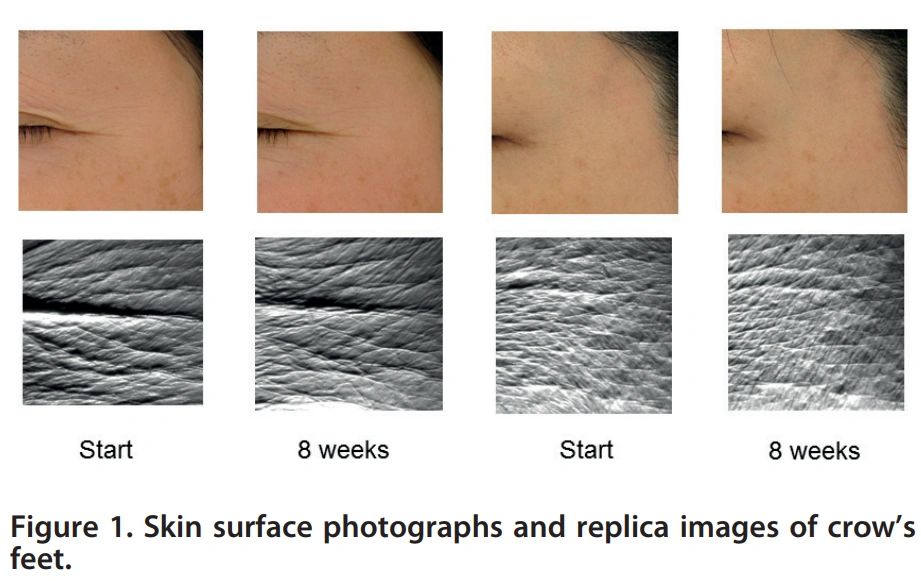
Significant improvements in skin health were observed in the first study involving 30 healthy female participants over eight weeks. The results were rather impressive. In the female group, significant improvements were noticed in several aspects of skin health, including skin wrinkles, age spot size, skin elasticity, and texture. There were notable reductions in the deepest wrinkle point, mean depth of deepest wrinkle, maximum width of deepest wrinkle, mean depth of all wrinkles, and the mean depth of texture at week 8.
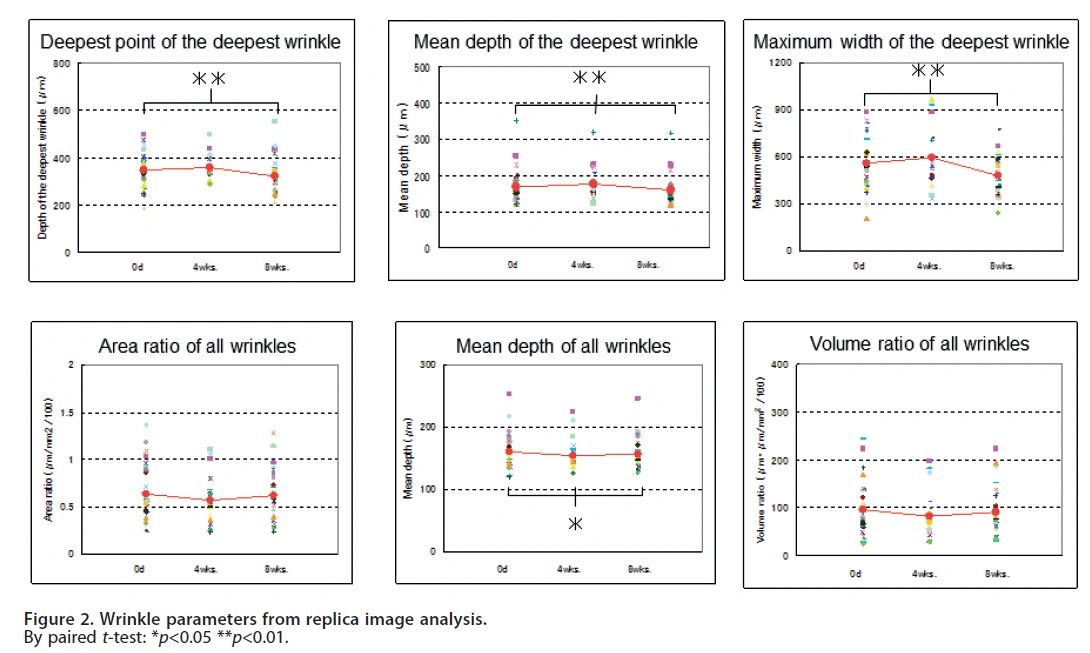
The second part of the study involved 36 healthy males over a span of six weeks. The results echoed the findings of the female study, with enhancements noted in wrinkles, elasticity, and transepidermal water loss (TEWL). There was also a strong tendency towards increased moisture content and sebum oil level at the cheek zone, marked at p=0.08 for those with initially dry skin. These results clearly indicate the potential of astaxanthin, derived from Haematococcus pluvialis, in improving skin condition in both genders.
Title: Cosmetic benefits of astaxanthin on humans subjects
Year: 2012
Author: Kumi Tominaga, Nobuko Hongo, Mariko Karato and Eiji Yamashita
Journal: Acta Biochim Pol
Study type: Randomized, double-blind, placebo-controlled human clinic trial
Test subjects: 30 healthy female ()aged 20 to 55 years old) subjects for 8 weeks; 36 healthy male (aged 20 to 60 years old) subjects for 6 weeks
Feed type: 6 mg per day oral supplementation and 2 ml (0.094% solution tropical) per day topical application of astaxanthin
Study 2: Supplementing with Dietary Astaxanthin Combined with Collagen Hydrolysate for Facial Elasticity
In the 2014 study titled “Supplementing with Dietary Astaxanthin Combined with Collagen Hydrolysate Improves Facial Elasticity and Decreases Matrix Metalloproteinase-1 and -12 Expression: A Comparative Study with Placebo,” significant strides in skin health were observed. The study, conducted by Yoon HS, Cho HH, Cho S, Lee SR, Shin MH, Chung JH, and published in J Med Food, involved the administration of astaxanthin (2 mg/day) combined with collagen hydrolysate (3 g/day) for 12 weeks.
The key findings of the study indicate significant improvements in skin elasticity and hydration parameters following astaxanthin and collagen hydrolysate supplementation. The research noted a notable mean improvement from baseline in skin elasticity in the supplement group compared to the placebo group (R2, 0.0252 vs. -0.0294, P=.035; R5, 0.0602 vs. -0.0195, P=.020; R7 0.0222 vs. – 0.0185, P=.012). While no significant changes were observed in skin hydration, the integrity of the skin barrier, as measured by Transepidermal Water Loss (TEWL), improved significantly in both groups. This improvement was more pronounced in the supplement group, with a decrease from 5.2 g/h/m2 to 3.4 g/h/m2 compared to the control group, maintaining statistical significance even after adjusting for baseline TEWL values (P=.048).
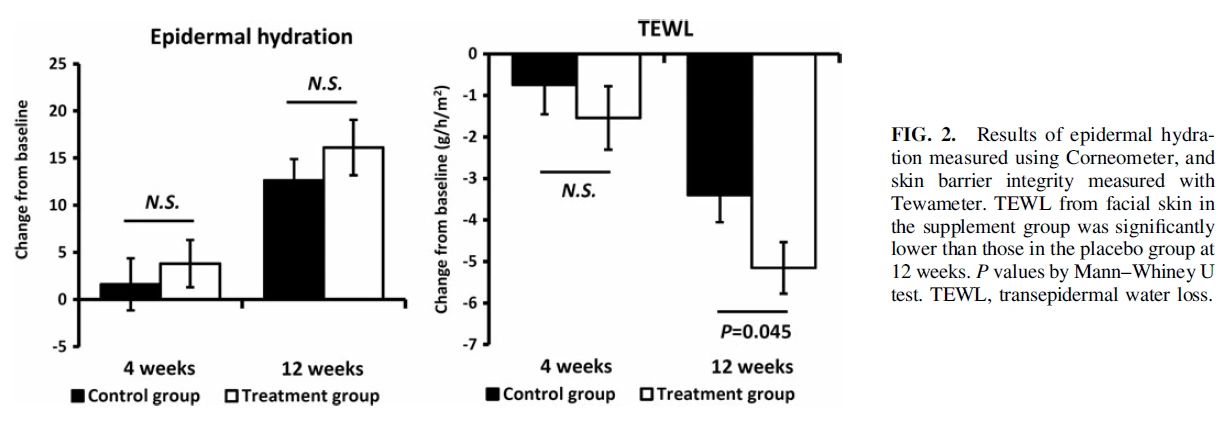
Furthermore, the supplementation resulted in a 3.4-fold increase in procollagen mRNA levels in UV-irradiated skin compared to the placebo group (P=.038), showcasing its potential in enhancing skin repair processes. It also considerably curbed the expression of Matrix Metalloproteinase-1 (MMP-1, collagenase) and MMP-12 (elastase) mRNA by 68% (P=.027) and 77% (P=.050), respectively, thereby potentially slowing the natural degradation of the skin matrix. Collectively, these findings affirm the value of dietary astaxanthin combined with collagen hydrolysate in improving skin elasticity and maintaining the integrity of the skin barrier.
Title: Supplementing with Dietary Astaxanthin Combined with Collagen Hydrolysate Improves Facial Elasticity and Decreases Matrix Metalloproteinase-1 and -12 Expression: A Comparative Study with Placebo
Year: 2014
Author: Yoon HS, Cho HH, Cho S, Lee SR, Shin MH, Chung JH
Journal: J Med Food
Study type: randomized, double-blind, placebo-controlled human clinic trial
Test subjects: 44 healthy female (aged 41-60 years) and who had wrinkles > grade 2
Feed type: astaxanthin (2 mg/day) combined with collagen hydrolysate (3 g/day) for 12 weeks
Study 3: Astaxanthin’s Impact on Skin Wrinkles, Moisture, and Elasticity
The clinical trial titled “The effectiveness of a standardized rose hip powder, containing seeds and shells of Rosa canina, on cell longevity, skin wrinkles, moisture, and elasticity,” conducted by Phetcharat L, Wongsuphasawat K, and Winther K in 2015, had its primary focus on the effects of rose hip powder. However, astaxanthin was used as a reference for comparison, providing insightful data about its potential benefits on skin health. The study, published in Clin Interv Aging, administered a daily 4mg oral dosage of astaxanthin for eight weeks to 34 healthy subjects, aged 35-65 years, with facial wrinkles.
While the study’s main objective was to examine the effects of rose hip powder, the findings related to astaxanthin proved to be notable. Over the 8-week treatment period, astaxanthin showed significant potential in improving multiple skin health parameters. Specifically, the depth of crow’s feet wrinkles reduced from an initial mean of 45.62±3.99 to 41.78±4.50 after the treatment period. Furthermore, a marked improvement was observed in skin elasticity on the right cheek, which improved from an initial 52.21±18.74 to 67.08±13.86 post-treatment.
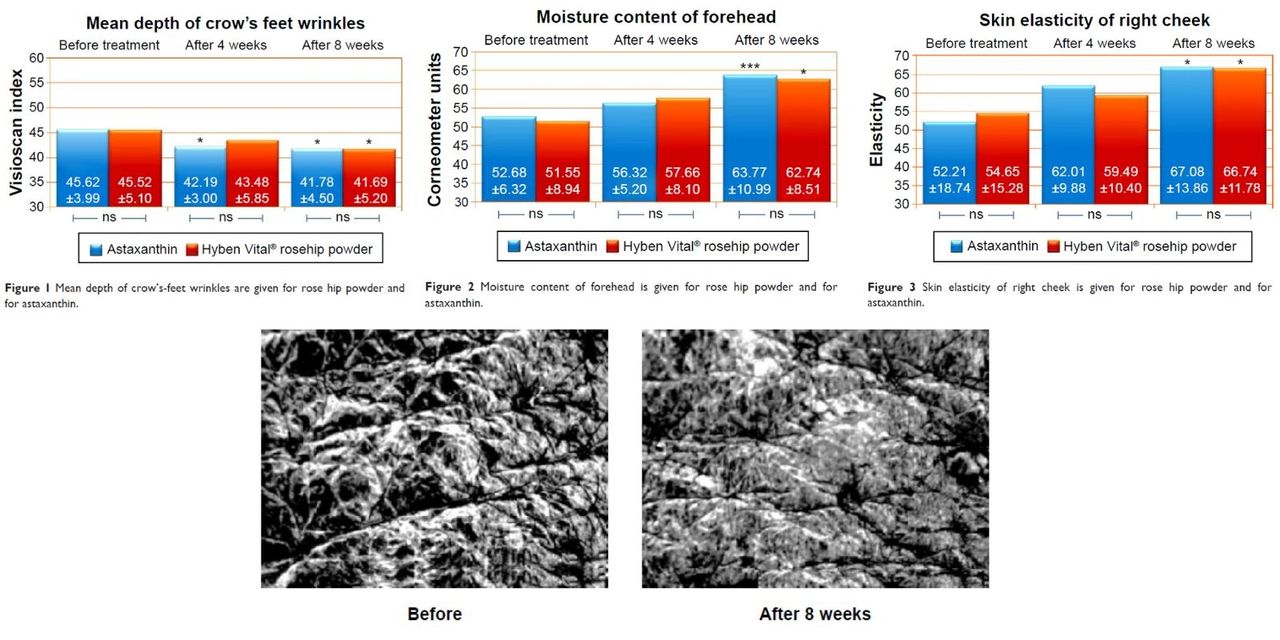
Astaxanthin’s effect on skin hydration was also observed, with the moisture content on the forehead increasing from 52.68±6.32 before treatment to 63.77±10.99 after the 8-week astaxanthin supplementation. This underscores the compound’s potential for increasing skin hydration. Despite the study’s main aim to investigate rose hip powder, these results imply astaxanthin’s significant potential in enhancing skin condition, especially regarding wrinkles, elasticity, and moisture content.
Title: The effectiveness of a standardized rose hip powder, containing seeds and shells of Rosa canina, on cell longevity, skin wrinkles, moisture, and elasticity
Year: 2015
Author:Phetcharat L, Wongsuphasawat K, Winther K.
Journal: Clin Interv Aging
Study type: double blind, randomized human clinic trial
Test subjects: 34 healthy subjects, aged 35-65 years, with wrinkles on the face
Feed type: 4mg astaxanthin oral, for 8 weeks
Study 4: Enhanced UV Tolerance from Oral Antioxidant Complex Including Astaxanthin
The study titled “Increase in minimal erythemal dose following oral administration of an antioxidant complex based on a mix of carotenoids: Double-blind, placebo-controlled trial” was published in Photodermatol Photoimmunol Photomed by Carrascosa JM, Floriach N, Sala E, and Aguilera J in 2017. It was a double-blind, placebo-controlled clinical trial involving 43 healthy volunteers aged between 18 and 60 years, with skin phototypes II and III. Participants received a daily dosage of a complex of astaxanthin (4 mg), β-carotene (4.8 mg), vitamin E (6 mg), vitamin C (40 mg), lutein (2.4 mg), and lycopene (2.4 mg) for a total of 8 weeks.
The study’s key findings revolve around the significant increase in the minimal erythemal dose (MED), indicating improved tolerance to ultraviolet radiation (UVR) after consuming the antioxidant complex. Initially, there was no significant difference in MEDs between the treatment and control groups, with values of 1.34 (0.29) and 1.32 (0.37), respectively. On day 29, the treatment group presented a 12.4% increase in MED (1.49 (0.38)), compared to a 4.96% increase in the control group, although this difference wasn’t statistically significant.
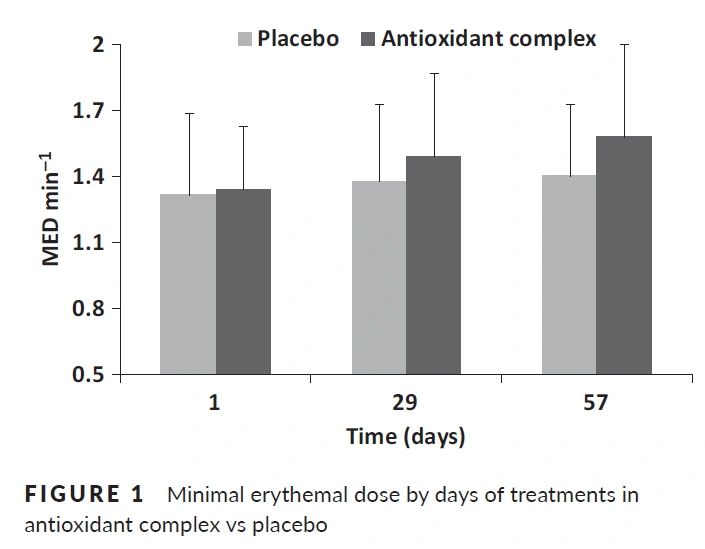
By day 57, however, the treatment group showed a significant 20.51% increase in MED (1.58 (0.44)), compared to an 8.63% increase in the control group (P=.049). This finding indicates a statistically significant difference, demonstrating the potential protective effects of the antioxidant complex against UVR. The results suggest that the antioxidant complex, including astaxanthin, provides a unique mechanism of action compared to traditional topical photoprotectors. Despite offering a lower level of protection, it could be beneficial because it does not rely on the proper application of topical photoprotection, which often poses challenges.
Title: Increase in minimal erythemal dose following oral administration of an antioxidant complex based on a mix of carotenoids: Double-blind, placebo-controlled trial
Year: 2017
Author:Carrascosa JM, Floriach N, Sala E, Aguilera J
Journal: Photodermatol Photoimmunol Photomed
Study type: double blind, placebo-controlled human clinic trial
Test subjects: 43 healthy volunteers aged between 18 and 60 years whose skin phototype was either II (at least 60% of participants) or III.
Feed type: complex of Astaxanthin (4 mg), β-carotene (4.8 mg), vitamin E (6 mg), vitamin C (40 mg), lutein (2.4 mg) and lycopene (2.4 mg) for 8 weeks
Study 5: Astaxanthin’s Protective Role Against UV-Induced Skin Deterioration
The study “The Protective Role of Astaxanthin for UV-Induced Skin Deterioration in Healthy People-A Randomized, Double-Blind, Placebo-Controlled Trial” was conducted by Ito N, Seki S, and Ueda F, and published in Nutrients in 2018. This randomized, double-blind, placebo-controlled clinical trial engaged 23 healthy Japanese participants aged 30-59 years, including 20 females and 2 males. They were given a dietary supplement of 4mg/day of Astaxanthin for a period of 9 weeks.
The key findings of this study showed that dietary supplementation with Astaxanthin had a protective role against UV-induced skin deterioration. After the 9-week supplementation period, while the raw Minimal Erythema Dose (MED) values were similar between the Astaxanthin and placebo groups, a noteworthy increase in MED from the baseline was seen in the Astaxanthin group. Moreover, Astaxanthin significantly reduced the UV-induced decrease in skin moisture after seven days of irradiation. Subjective improvements in “rough skin” and “texture” in non-irradiated areas during the supplementation were also significantly better in the Astaxanthin group.
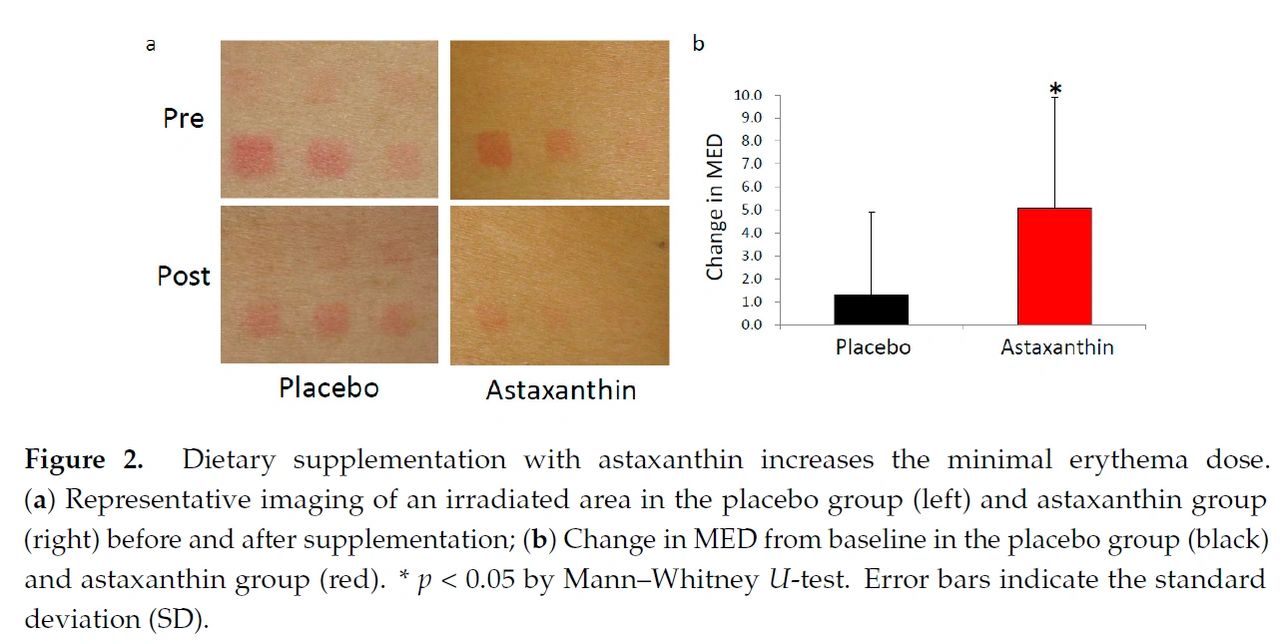
There were no adverse events reported in relation to Astaxanthin ingestion, affirming its safety. The research concluded that Astaxanthin, through dietary supplementation, effectively increased MED, counteracted UV-induced moisture decrease, and may play a protective role against UV-induced skin damage, thereby promoting skin health. Astaxanthin’s antioxidant and anti-inflammatory effects, as well as its role in preventing UV-induced DNA damage, were discussed. Improved absorption of Astaxanthin was achieved through the use of dispersant technology. With an average MED increase of about 5 mJ/cm2 in the Astaxanthin group, it was suggested that this supplement might protect skin from damage equivalent to 1.5 hours of sun exposure during a Japanese summer.
Title: The Protective Role of Astaxanthin for UV-Induced Skin Deterioration in Healthy People-A Randomized, Double-Blind, Placebo-Controlled Trial
Year: 2018
Author: Ito N, Seki S, Ueda F
Journal: Nutrients
Study type: randomized, double-blind, placebo-controlled human clinic trial
Test subjects: 23 healthy Japanese participants (30-59 years, 20 females and 2 males)
Feed type: 4mg/day Astaxanthin for 9 weeks
Study 6: Astaxanthin’s Effect on Allergic Contact Dermatitis due to Hair Dye
The study “The effect of Astaxanthin on allergic contact dermatitis in response to hair dye containing p-phenylenediamine” was conducted by Trakanwittayarak S, and Meephansan J, and published in the European Journal of Dermatology in 2019. The research was a placebo-controlled human clinical trial involving 13 volunteers aged 20 to 70 years (3 males and 10 females) who had allergies associated with p-phenylenediamine. The test subjects were pre-treated with a 0.07% Astaxanthin emulsion, applied topically for 10 minutes.
The key findings from this study showed that pre-treatment with the Astaxanthin emulsion significantly reduced allergic reactions to p-phenylenediamine, an ingredient commonly found in hair dyes. Specifically, on the second day (D2) of the occlusion patch test, five out of twelve subjects showed a lower grade of elicited reaction, a result that was statistically significant (p = 0.025). Similarly, on the seventh day (D7), a statistically significant reduction in elicited reactions was noted in two out of twelve subjects (p = 0.046).
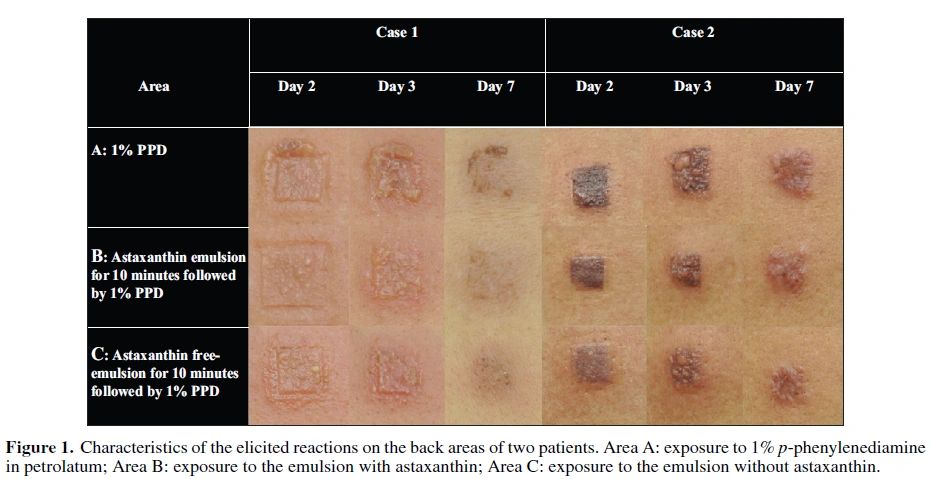
The Astaxanthin emulsion used in this study, comprising 0.07% Astaxanthin along with tocopherol, ethanol, and glyceryl ester, exhibited superior efficacy in quenching singlet oxygen, compared to other antioxidants. No serious adverse effects were reported following the application of the Astaxanthin or vehicle emulsion. Consequently, the study concluded that pre-treatment with an Astaxanthin emulsion could potentially mitigate allergic contact dermatitis caused by p-phenylenediamine-containing hair dye cosmetics in sensitized individuals.
Title: The effect of Astaxanthin on allergic contact dermatitis in response to hair dye containing p-phenylenediamine
Year: 2019
Author: Trakanwittayarak S, Meephansan J
Journal: Eur J Dermatol
Study type: placebo-controlled human clinical trial
Test subjects:13 volunteers (3 males and 10 females, 20-70 years) with allergy assocaciated with p-phenylenediamine
Feed type: 0.07% Astaxanthin emulsion (0.3ml) applied tropical for 10 minutes
What Does This All Mean for Your Skin?
Breaking down the outcomes from these six research studies, Astaxanthin emerges as a powerhouse for skin wellness. What does this mean for someone invested in their skin health? Let’s draw on some popular questions to explain.
- Can Astaxanthin Help to Reduce Signs of Aging? As we age, our skin naturally becomes more prone to wrinkles and loses its elasticity. These visible signs of aging often lead us to seek out skincare products that offer anti-aging benefits. The research conducted by Tominaga et al., 2012, offers promising results in this arena. They found that Astaxanthin supplementation resulted in a significant reduction in wrinkle depth and an increase in skin elasticity. Imagine looking in the mirror each day to find your skin appearing youthful, with those creases and fine lines noticeably softened. It’s almost as if Astaxanthin might hold the key to turning back the clock on your skin, helping you maintain that youthful glow for longer.
- Will Astaxanthin Offer Protection Against Sun Damage? We’ve all experienced the negative effects of excessive sun exposure. From sunburns to long-term damage like premature skin aging and hyperpigmentation, harmful UV rays can wreak havoc on our skin. So, how can Astaxanthin help? The study conducted by Carrascosa JM et al., 2017, shed light on this aspect. They discovered that participants consuming an antioxidant mix featuring Astaxanthin exhibited a significant increase in their minimal erythemal dose (MED) – a measure of skin’s resistance to UV-induced redness. This improvement by a whopping 20.51% implies that with Astaxanthin, your skin could better endure the sun’s rays. It might just be the extra armor your skin needs against harmful UV radiation, allowing you to enjoy sunny days without the added worry about your skin.
- Does Astaxanthin Hydrate Dry Skin? If you’ve ever suffered from dry skin, you’ll know it can feel tight, rough, and uncomfortable. Skincare regimens for dry skin often include intensive moisturizers, but what if a supplement could help as well? Both the studies by Phetcharat L et al., 2015, and Ito N et al., 2018, documented a significant increase in skin moisture following Astaxanthin supplementation. This means the compound could provide an internal source of hydration, helping your skin retain moisture and stay supple. Imagine feeling your skin becoming softer, smoother, and thoroughly hydrated – that’s the potential of Astaxanthin.
- Could Astaxanthin Alleviate Allergic Reactions to Hair Dye? Hair dye allergies are more common than you’d think, often leaving people with discomfort and irritation. This is where the study by Trakanwittayarak S and Meephansan J, 2019, becomes interesting. They found that Astaxanthin could help reduce the allergic contact dermatitis response associated with p-phenylenediamine, a common ingredient in hair dyes. This means Astaxanthin could potentially soothe and protect your skin, reducing irritation and discomfort when pampering your hair with a new color.
- Can Astaxanthin Improve Skin Texture? A smooth, even skin texture is often considered a sign of healthy skin. And Astaxanthin might help you achieve just that. The study by Ito N et al., 2018, found improvements in “rough skin” and “texture” during supplementation with Astaxanthin. That’s right – by adding Astaxanthin to your regimen, you could find your skin becoming smoother, healthier, and more refined. In essence, Astaxanthin appears to be an all-rounder when it comes to skincare. From fighting signs of aging and UV damage to boosting moisture levels, soothing allergic reactions, and enhancing skin texture, this natural antioxidant offers a myriad of benefits. However, it’s crucial to remember that while the research shows promising results, individual responses to Astaxanthin may vary, and it should not replace a balanced diet, regular exercise, and a solid skincare routine.
- Is Astaxanthin Safe for Everyone? While we’ve discussed numerous benefits of Astaxanthin, you might be wondering, “But is it safe?” Safety should always be a priority when incorporating new supplements into your regimen. The good news is, these studies collectively suggest that Astaxanthin, whether consumed orally or applied topically, is generally well-tolerated and safe. No adverse effects were reported in the studies by Tominaga et al., 2012, Ito N et al., 2018, or Trakanwittayarak S and Meephansan J, 2019, thus adding a layer of confidence to your decision to try Astaxanthin.
- How Long Will It Take to See Benefits from Astaxanthin? You might be eager to start seeing the effects of Astaxanthin on your skin. According to the studies we’ve discussed, most observed significant improvements in skin health over periods ranging from 8 to 10 weeks of regular supplementation or application. However, like any natural supplement, the speed at which you’ll notice changes can vary based on individual factors such as your current skin condition, overall health, and lifestyle. Consistency will be key to experiencing the full potential of Astaxanthin’s skin-enhancing properties.
In summary, the exploration of Astaxanthin and its potential benefits for skin health is an exciting frontier in skincare research. These studies collectively show that Astaxanthin may provide a range of benefits to your skin, making it a compelling consideration for your skincare journey. As always, remember to consult your dermatologist or healthcare provider before starting any new supplement regimen.
Conclusion: Elevating Your Skin Health with Astaxanthin
Considering the wealth of scientific evidence, we advocate for anyone striving to enhance their skin health to contemplate the addition of Astaxanthin to their skincare toolbox. The comprehensive benefits, coupled with its proven safety, make Astaxanthin a compelling candidate for your daily regimen. So, come and embark on this exhilarating journey towards optimal skin health, where the potent effects of Astaxanthin await discovery.
Reference
1. Tominaga K, Hongo N, Karato M, Yamashita E. Cosmetic benefits of astaxanthin on humans subjects. Acta Biochim Pol. 2012;59(1):43-7. Epub 2012 Mar 17. PMID: 22428137.
2. Yoon HS, Cho HH, Cho S, Lee SR, Shin MH, Chung JH. Supplementating with dietary astaxanthin combined with collagen hydrolysate improves facial elasticity and decreases matrix metalloproteinase-1 and -12 expression: a comparative study with placebo. J Med Food. 2014 Jul;17(7):810-6. doi: 10.1089/jmf.2013.3060. Epub 2014 Jun 23. PMID: 24955642.
3. Phetcharat L, Wongsuphasawat K, Winther K. The effectiveness of a standardized rose hip powder, containing seeds and shells of Rosa canina, on cell longevity, skin wrinkles, moisture, and elasticity. Clin Interv Aging. 2015 Nov 19;10:1849-56. doi: 10.2147/CIA.S90092. PMID: 26604725; PMCID: PMC4655903.
4. Carrascosa JM, Floriach N, Sala E, Aguilera J. Increase in minimal erythemal dose following oral administration of an antioxidant complex based on a mix of carotenoids: Double-blind, placebo-controlled trial. Photodermatol Photoimmunol Photomed. 2017 Sep;33(5):284-286. doi: 10.1111/phpp.12315. Epub 2017 Jun 30. PMID: 28503757.
5. Ito N, Seki S, Ueda F. The Protective Role of Astaxanthin for UV-Induced Skin Deterioration in Healthy People-A Randomized, Double-Blind, Placebo-Controlled Trial. Nutrients. 2018 Jun 25;10(7):817. doi: 10.3390/nu10070817. PMID: 29941810; PMCID: PMC6073124.
6. Trakanwittayarak S, Meephansan J. The effect of astaxanthin on allergic contact dermatitis in response to hair dye containing p-phenylenediamine. Eur J Dermatol. 2019 Dec 1;29(6):647-648. doi: 10.1684/ejd.2019.3654. PMID: 31903956.