


Astaxanthin is a natural antioxidant being studied for its potential role in colon health. Early research suggests it may help reduce oxidative stress, support natural cell defense systems, slow abnormal cancer cell growth, and influence biological pathways linked to tumor spread.
Most findings come from laboratory and animal studies, but they highlight growing scientific interest in nutrition-derived compounds as part of future integrative approaches to cancer research.
Key Research Findings
Studies suggest astaxanthin may:
- Reduce oxidative stress in colon cancer cells
- Increase antioxidant enzyme activity
- Promote apoptosis through mitochondrial pathways
- Suppress EGFR and mTOR signaling
- Regulate MYC-associated metastasis pathways
Introduction
Colon cancer (also known as colorectal cancer) is one of the most common cancers worldwide and remains a leading cause of cancer-related mortality. The disease develops through a multistep process involving genetic mutations, environmental factors, chronic inflammation, and cellular damage caused by oxidative stress.
Long-term inflammatory conditions such as inflammatory bowel disease are known to increase colon cancer risk. Chronic inflammation can damage DNA and disrupt normal cell communication, creating an environment that supports tumor formation.
Growing scientific interest has focused on natural antioxidants that may influence these biological pathways. Astaxanthin, a carotenoid antioxidant derived from microalgae, has recently attracted attention in colon cancer research due to its potential effects on oxidative stress, apoptosis, and tumor signaling pathways.
What is astaxanthin?
Astaxanthin is a naturally occurring carotenoid antioxidant produced by microalgae such as Haematococcus pluvialis. It is responsible for the red coloration found in salmon, shrimp, and krill.
In recent years, astaxanthin has attracted increasing scientific attention due to its strong antioxidant and anti-inflammatory properties. Researchers are investigating whether these biological effects may influence pathways involved in chronic diseases, including colon cancer. Laboratory studies suggest that astaxanthin may modulate oxidative stress, apoptosis, and tumor growth signaling pathways.
Astaxanthin is widely recognized as a powerful antioxidant derived from microalgae. Learn more about natural astaxanthin and its health benefits.
Oxidative Stress Reduction and Restoration of Antioxidant Defence
Antioxidant enzyme activity (dose-dependent increase)
| Enzyme | Control | 150 µM ATX |
| SOD | 18.02 ± 1.9 | 29.4 ± 2.1 |
| GPx | 357.2 ± 44.1 | 713.3 ± 41.5 |
| Catalase | 1.12 ± 0.11 | 2.18 ± 0.3 |
Cancer cells often produce high levels of reactive oxygen species (ROS) — unstable molecules that can damage DNA and promote tumor growth. In human colorectal cancer cells, astaxanthin treatment significantly rmarkers of oxidative damage by about 50% 1.
At the same time, it increased the activity of key protective enzymes:
- Superoxide dismutase increased by roughly 60%
- Glutathione peroxidase levels doubled
- Catalase activity also nearly doubled.
These findings suggest astaxanthin may help restore balance between harmful molecules and the body’s natural defense systems. This balance is important because oxidative damage plays a role in early cancer development.
Astaxanthin May Trigger Apoptosis in Colon Cancer Cells
Healthy cells naturally undergo a controlled process called apoptosis when they become damaged. Cancer cells often evade this mechanism, allowing them to survive longer than normal.
Research shows astaxanthin may help reactivate this process in colon cancer cells. It increases signals that promote cell death while reducing signals that help cancer cells survive1.
Encouraging controlled cell death is important because it limits inflammation and may slow tumor progression.
Dose-Dependent Effects of Astaxanthin on Colon Cancer Cell Survival
Studies using another colon cancer cell model found that astaxanthin reduced the number of living cancer cells in a dose-dependent way: 2.
- About 80% of cells survived at lower concentrations
- Survival dropped to around 44% at higher concentrations
Further analysis showed that most affected cells died through programmed mechanisms rather than sudden cell rupture. This distinction matters because controlled cell death is less likely to trigger inflammatory responses that may support tumor growth.
Astaxanthin May Suppress EGFR and Growth Signaling in Colon Cancer
Cancer cells rely on internal signals that stimulate growth and division. One key pathway involves a protein known as EGFR 2.
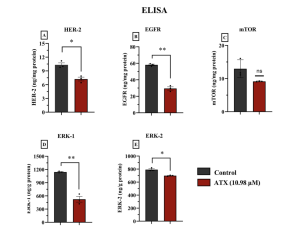
Research suggests astaxanthin may reduce activity in this pathway 2. In treated cells:
- EGFR levels decreased significantly
- Other growth-related proteins such as HER2 and mTOR were also reduced
- Markers associated with cell death increased
These findings indicate astaxanthin may simultaneously slow cancer cell growth while promoting the removal of damaged cells.
Astaxanthin May Slow Colon Cancer Cell Proliferation
Uncontrolled cell division is a hallmark of cancer. Studies show astaxanthin may influence proteins that regulate the cell cycle 2.
After treatment, protective proteins that slow cell division increased, while proteins that promote growth decreased. This suggests astaxanthin may help pause cancer cell replication, limiting tumor expansion.
Potential Role of Astaxanthin in Preventing Colon Cancer Metastasis
Metastasis, the spread of cancer to other organs, is the main cause of death in colon cancer patients.
Experimental studies suggest astaxanthin may reduce the ability of cancer cells to move and invade surrounding tissues 3. It appears to influence small genetic regulators (microRNAs) that control how aggressively cancer cells behave.
When these regulators are restored, cancer cells may become less capable of spreading.
Astaxanthin Suppresses MYC Signaling and Colon Cancer Metastasis
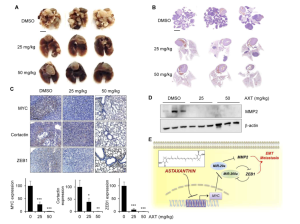
Astaxanthin has also been shown to affect MYC, a gene involved in cancer growth and metastasis. In animal studies, mice given astaxanthin developed fewer lung metastases compared with untreated animals 3. Treatment doses ranged from 25–50 mg per kilogram of body weight.
These results suggest astaxanthin’s biological effects may extend beyond isolated cells to influence tumor behavior in living organisms. However, human clinical research is still needed.
Anti-Inflammatory Effects of Astaxanthin in the Colon Cancer Microenvironment
Chronic inflammation contributes to cancer growth by altering immune responses and promoting tumor-supportive signals.
By reducing oxidative stress and supporting controlled cell death, astaxanthin may also help regulate inflammatory processes within the tumor environment. This broader effect could be important because cancer progression depends not only on tumor cells but also on surrounding tissues and immune activity.
Future Research Directions
Although current evidence is largely derived from preclinical studies, the mechanistic breadth of astaxanthin’s biological activity suggests promising avenues for future research. Potential applications include:
- Preventive strategies targeting oxidative stress-driven carcinogenesis
- Adjunctive therapeutic use alongside targeted or chemotherapeutic agents
- Modulation of metastatic progression through transcriptional and microRNA pathways
However, clinical validation remains essential. Future studies should focus on pharmacokinetics, optimal dosing strategies, and potential interactions with existing therapies. Understanding context-dependent effects on redox signalling will also be critical, as excessive antioxidant activity may influence treatment responsiveness.
Future Perspectives and Conclusion
Astaxanthin is gaining scientific attention as a natural compound that may influence several biological processes linked to colon cancer development. Research in cellular and animal models suggests it may help regulate oxidative stress, support controlled cancer cell death, slow abnormal cell growth, and influence pathways involved in tumor spread.
These findings highlight the growing role of nutrition-derived compounds in modern biomedical research. Rather than acting as single-target interventions, compounds like astaxanthin are being studied for their ability to support multiple biological systems involved in disease progression.
While human clinical research is still developing, current evidence provides a strong scientific foundation for continued investigation. As understanding of cancer biology evolves, naturally derived antioxidants such as astaxanthin may play an increasingly important role in strategies focused on long-term colon health and integrative approaches to disease management.
Ongoing research will help clarify optimal intake levels, biological availability, and how astaxanthin may complement existing medical therapies. Together, these insights contribute to a broader shift toward combining nutritional science with advances in oncology research.
Frequently Asked Questions (FAQ)
Does astaxanthin help colon cancer?
Current studies suggest that astaxanthin may influence several biological pathways involved in colon cancer, including oxidative stress, inflammation, and apoptosis. Laboratory research in colon cancer cells and animal models indicates that astaxanthin may help regulate tumor growth signaling and metastatic processes. However, most evidence remains preclinical, and further clinical research is needed to determine its potential role in human colon cancer prevention or treatment.
Is astaxanthin an antioxidant?
Yes. Astaxanthin is a naturally occurring carotenoid antioxidant produced by microalgae such as Haematococcus pluvialis. It is known for its strong ability to neutralize reactive oxygen species (ROS) and reduce oxidative stress, which is a biological process associated with aging, inflammation, and the development of diseases such as colon cancer.
What foods contain astaxanthin?
Astaxanthin naturally occurs in marine organisms that consume microalgae. It is responsible for the red color in foods such as salmon, shrimp, krill, lobster, and trout. The highest natural source of astaxanthin, however, is the microalgae Haematococcus pluvialis, which is commonly used to produce natural astaxanthin supplements.
Is astaxanthin being studied for cancer research?
Yes. Researchers are studying astaxanthin for its potential biological effects in several areas of cancer research, including colon cancer. Laboratory studies suggest that astaxanthin may influence oxidative stress, inflammation, apoptosis, and cell signaling pathways involved in tumor development. However, more clinical research is required to confirm these effects in humans.
How does oxidative stress relate to colon cancer?
Oxidative stress occurs when reactive oxygen species (ROS) accumulate faster than the body can neutralize them with antioxidants. Excess ROS can damage DNA, proteins, and cell membranes, contributing to genetic mutations and abnormal cell growth. Because oxidative stress is closely linked to colon cancer development, antioxidants such as astaxanthin are being investigated for their potential protective roles.
What makes astaxanthin different from other antioxidants?
Astaxanthin is considered a unique antioxidant because its molecular structure allows it to span cell membranes and protect both the inner and outer layers of the lipid bilayer. This structural feature enables astaxanthin to stabilize cell membranes and neutralize reactive oxygen species more efficiently than many other carotenoids.
Is astaxanthin safe to take daily?
Astaxanthin has been widely studied as a dietary antioxidant and is generally considered safe when consumed at typical supplemental doses. Regulatory authorities in several countries allow the use of astaxanthin in dietary supplements. However, individuals with medical conditions or those undergoing treatment for diseases such as colon cancer should consult healthcare professionals before using supplements.
References
- Hormozi, M. & Baharvand, P. Astaxanthin’s Impact on Colorectal Cancer: Examining Apoptosis, Antioxidant Enzymes, and Gene Expression. The Open Biochemistry Journal 18, (2024).
- Taştemur, Ş., Kaleci, A. O., Öztürk, A. & Mendil, A. S. Astaxanthin promotes apoptosis by suppressing growth signaling pathways in HT-29 colorectal cancer cells. Medical Oncology 42, (2025).
- Kim, H.-Y., Kim, Y.-M. & Hong, S. Astaxanthin suppresses the metastasis of colon cancer by inhibiting the MYC-mediated downregulation of microRNA-29a-3p and microRNA-200a. Scientific Reports 9, (2019).