


Introduction
Astaxanthin is a powerful antioxidant that has gained popularity for its numerous health benefits. It’s found in various sources, such as microalgae, yeast, and synthetic forms. However, not all astaxanthin sources are created equal. In this blog, we will discuss the differences between these sources, focusing on a microalgae strain – Haematococcus pluvialis as a superior source of natural astaxanthin, and how Iconthin Biotech ensures the highest quality product.
1. Different Sources of Astaxanthin
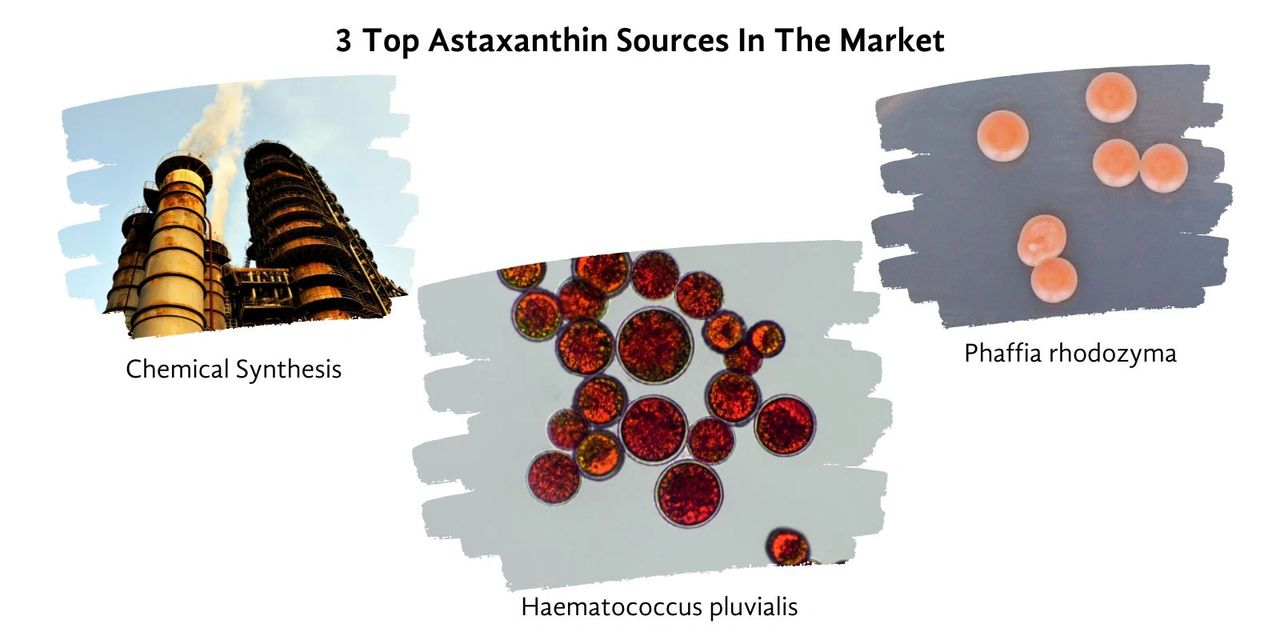
Astaxanthin can be sourced from several places, with the most common being synthetic, yeast-derived, and microalgae-derived forms. Synthetic astaxanthin is a by-product of petrochemicals and accounts for 95% of the market, primarily used in aquaculture as a food additive. Natural astaxanthin can be produced by yeast (Phaffia Rhodozyma) or microalgae (Haematococcus pluvialis). Though both yeast and microalgae-derived astaxanthin are considered natural, their chemical structures differ.
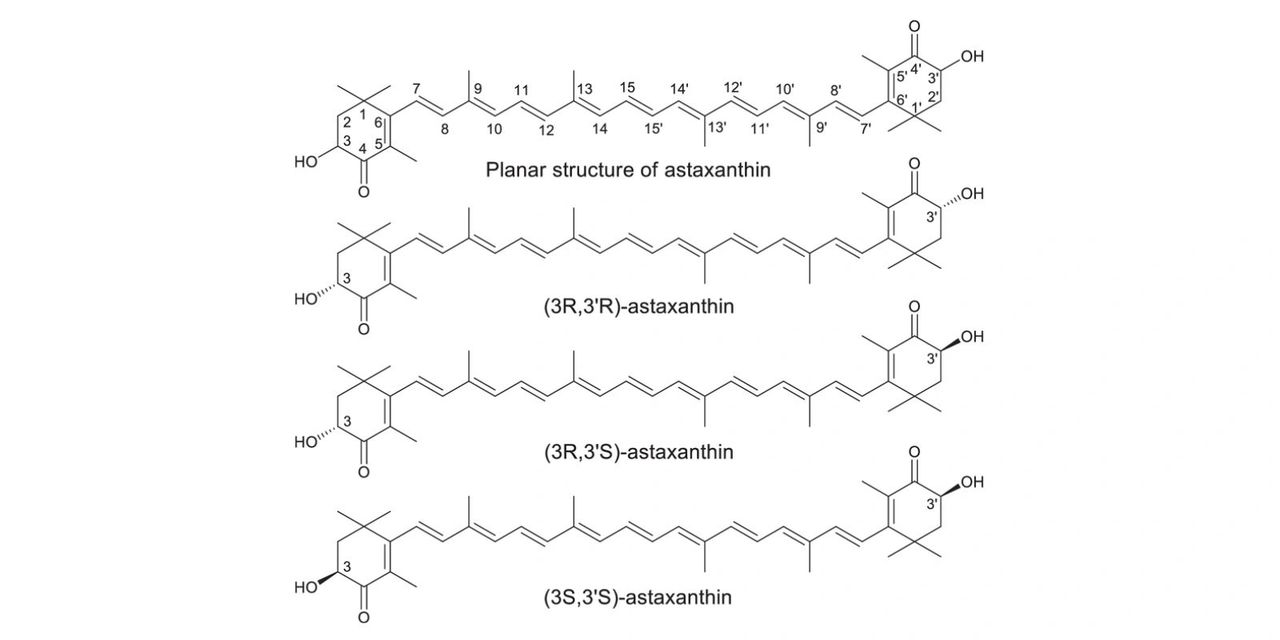
The three main differences between astaxanthin sources are stereoisomers, geometric isomers, and their free or esterified forms. Haematococcus pluvialis produces levo-astaxanthin (3S,3’S), while Phaffia Rhodozyma produces dextro-astaxanthin (3R,3′R). Synthetic astaxanthin contains 50% astaxanthin in meso-form (3R,3’S).
Three geometric strictures of astaxanthin from different sources
Synthesized Astaxanthin: 25% levo-astaxanthin, 25% dextro-astaxanthin, 50% meso-astaxanthin,
Phaffia rhodozyma Astaxanthin: Pure dextro-astaxanthin
Haematococcus source astaxanthin: Pure levo-astaxanthin
2. Superiority of Haematococcus Pluvialis
Astaxanthin from microalgae offers several advantages as a source of natural astaxanthin, making it a superior choice compared to synthetic astaxanthin or astaxanthin from other natural sources, such as yeast. .
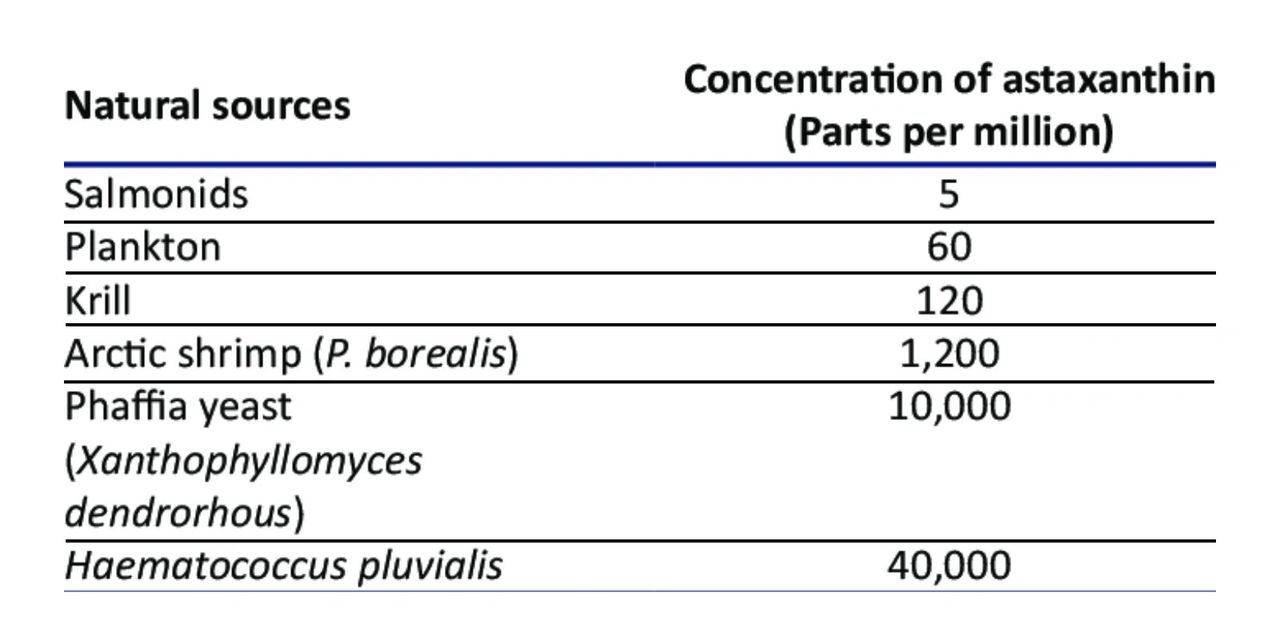
- Higher concentration: Haematococcus pluvialis produces the highest concentration of natural astaxanthin in nature. This microalga can accumulate astaxanthin up to 40,000 ppm (parts per million), whereas other popular sources, such as krill, only contain around 120 ppm. The higher concentration results in a more potent and effective product.
- Superior bioavailability: Natural astaxanthin from algae Haematococcus pluvialis is predominantly in the esterified form, which has been shown to have better bioavailability than the non-esterified form found in synthetic astaxanthin or astaxanthin from other natural sources such as yeast (Phaffia rhodozyma).
- Optimal isomer composition: Haematococcus pluvialis produces astaxanthin in the 3S, 3’S isomer form, which is the most bioactive and effective form for human consumption. Synthetic astaxanthin contains a mixture of isomers, including the less effective 3R, 3’S (meso) form, whereas astaxanthin from yeast is primarily in the 3R, 3’R form.
- Sustainability: Haematococcus pluvialis can be cultivated using sustainable methods, reducing the environmental impact compared to synthetic astaxanthin production, which relies on petrochemicals.
3. Quality and Potency Comparison
Natural astaxanthin derived from Haematococcus pluvialis has a proven track record in scientific research, with over 1,200 studies conducted worldwide. These investigations span cellular, animal, and human clinical trials, which offer compelling evidence of the health benefits associated with astaxanthin from Haematococcus pluvialis. Synthetic astaxanthin, on the other hand, lacks this extensive research support, while astaxanthin from yeast is insufficient to provide the same health benefits.
Safety and regulatory approval: Astaxanthin from Haematococcus pluvialis has been deemed safe for human consumption and has received approval from regulatory bodies such as the FDA. Synthetic astaxanthin, in contrast, is not permitted for human consumption by the FDA.
Extensive research support: The vast majority of studies investigating the health benefits of astaxanthin have utilized the natural form derived from Haematococcus pluvialis. This comprehensive body of research offers solid evidence for the safety and effectiveness of astaxanthin sourced from Haematococcus pluvialis, making it the superior choice for consumers seeking the advantages of this powerful antioxidant.
4. Benefits of Astaxanthin from Haematococcus Pluvialis
The chemical structure differences between astaxanthin sources impact their potential health benefits. Over 90% of astaxanthin research focuses on the benefits derived from Haematococcus pluvialis, while other sources lack sufficient evidence. Some of the well-researched benefits of natural astaxanthin from Haematococcus pluvialis include:
- Potent antioxidant and anti-inflammatory properties
- Supports cardiovascular health
- Enhances skin health and helps protect against UV damage
- Improves eye health and reduces the risk of age-related macular degeneration
- Boosts immune system function
- Increases athletic performance and aids in muscle recovery
5. Commitment to Quality and Affordability
Iconthin Biotech is dedicated to providing high-quality, sustainable algae-based ingredients, while ensuring competitive pricing. Our commitment to both quality and affordability is driven by our continuous development and optimization efforts in every stage of the algae industry, from strain selection, culture growth optimization, and downstream processing to application development.
The only way to replace petrochemical products with more sustainable algae-based ingredients is to ensure high productivity and cost competitiveness. At Iconthin Biotech, we recognize the importance of achieving this balance, as it plays a critical role in driving the adoption of environmentally friendly alternatives.
Our vision is to further lower the cost of algae-based ingredients without compromising on quality. Through rigorous research and development, innovative technologies, and efficient production methods, we aim to make algae-based ingredients like Haematococcus pluvialis-derived astaxanthin more accessible to businesses and consumers alike.
By investing in the improvement of our cultivation and extraction methods, we have managed to produce premium astaxanthin products under the brand AlgaeAsta™ at competitive prices. This approach not only enhances the quality of our offerings but also promotes the adoption of sustainable, algae-based ingredients in various industries.
Conclusion
When it comes to astaxanthin, the source matters. Haematococcus pluvialis is the superior choice for natural astaxanthin, offering numerous health benefits backed by extensive research. Iconthin Biotech is dedicated to providing the highest quality astaxanthin from Haematococcus pluvialis, using cutting-edge cultivation and extraction methods to ensure a safe and effective product.
With Haematococcus pluvialis-derived astaxanthin, you can be confident that you are getting a potent, natural antioxidant with a wide range of health benefits. Make the smart choice and invest in the best astaxanthin source available, brought to you by Iconthin Biotech.