


Introduction
Astaxanthin is a naturally occurring carotenoid pigment that has captured attention worldwide for its vibrant color and powerful antioxidant properties. Found in microalgae, salmon, shrimp, and krill, it’s the compound that gives these creatures their distinct reddish-pink hue. But beyond its role as a natural pigment, astaxanthin is celebrated as a “super antioxidant,” known to be many times stronger than vitamins C and E.
Over the years, researchers have uncovered its broad range of applications—from protecting human health and enhancing skin beauty to improving aquaculture sustainability. In this article, we’ll explore why astaxanthin truly matters, highlighting its diverse roles in wellness, skincare, and animal health.
Astaxanthin in Human Health
Astaxanthin’s benefits for human health are backed by science, making it one of the most promising natural supplements today.
Antioxidant Power
Oxidative stress is a major factor in chronic diseases and aging. Astaxanthin stands out because it neutralizes free radicals far more effectively than common antioxidants like vitamin C and vitamin E. Its molecular structure allows it to span cell membranes, offering protection inside and out, which contributes to overall cellular resilience.
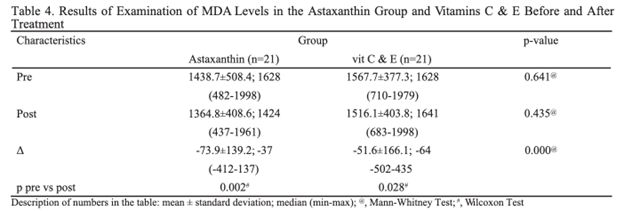
In patients with head and neck cancer 1, 21 days of astaxanthin lowered malondialdehyde (a marker of oxidative stress) significantly more than vitamin C and E (Aminullah et al., 2024), reinforcing why it is often called a “super antioxidant.”
Eye Health
Astaxanthin is particularly valuable for eye health because it supports retinal function and protects against damage from blue light and oxidative stress. Studies suggest it may help reduce the risk of age-related macular degeneration, one of the leading causes of vision loss in older adults.
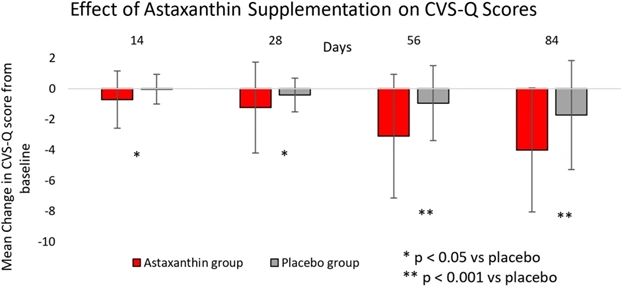
In children using screens for 4+ hours daily 2, 4 mg/day of astaxanthin reduced digital eye strain by 27% and improved stereopsis and tear production within 84 days, improved symptoms of eye strain, reduced visual fatigue, and enhanced measures of visual performance compared with placebo. This shows its benefits extend to both developing and aging eyes in today’s screen-heavy world.
Brain and Cognitive Support
Unlike many antioxidants, astaxanthin can cross the blood–brain barrier. This unique property makes it especially effective for supporting memory, mental clarity, and long-term brain health. Researchers have linked it to neuroprotection, with potential benefits in slowing or preventing age-related decline.
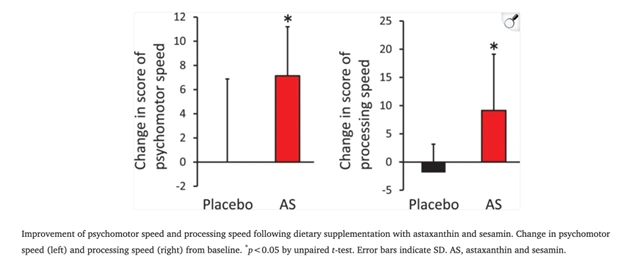
In adults with mild cognitive impairment 3, astaxanthin improved psychomotor and processing speed scores compared to placebo within 12 weeks (Ito et al., 2018), suggesting that it can help maintain sharper thinking and quicker reactions in aging adults.
Heart and Metabolic Health
Chronic inflammation and poor cholesterol balance contribute to heart disease. Astaxanthin helps lower oxidative stress, supports healthy blood flow, and promotes better lipid metabolism. These effects make it a natural ally for cardiovascular wellness.
In men with obesity 4, 12 weeks of astaxanthin plus high-intensity training reduced body fat, improved cholesterol balance, and lowered key adipokines linked to cardiovascular risk, and better overall metabolic health compared with exercise or supplementation alone (Saeidi et al., 2023). This shows how astaxanthin can enhance lifestyle interventions to lower cardiovascular risk.
Sports & Recovery
For athletes and active individuals, astaxanthin can reduce muscle fatigue, improve endurance, and speed up recovery. By lowering oxidative damage caused by intense exercise, it helps maintain performance and resilience.
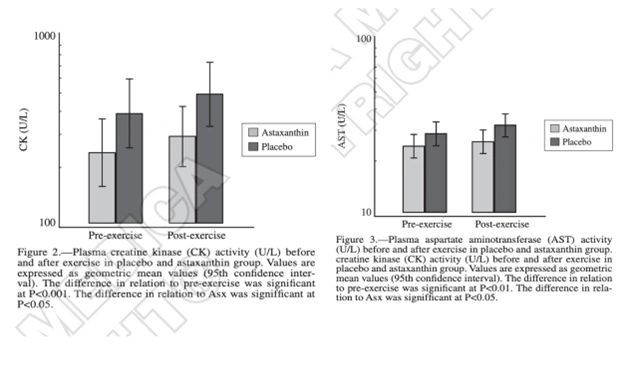
Among elite soccer players 5, 90 days of supplementation reduced post-exercise muscle damage markers (CK and AST) by up to 20% compared with placebo (Djordjevic et al., 2012, supporting its role as a natural performance and recovery aid.
Astaxanthin in Beauty & Skin Care
Astaxanthin has gained attention in the beauty world for its ability to protect skin from the inside out. Unlike many topical treatments, it works at the cellular level, strengthening the skin’s natural barrier and defending against environmental stressors like UV rays.
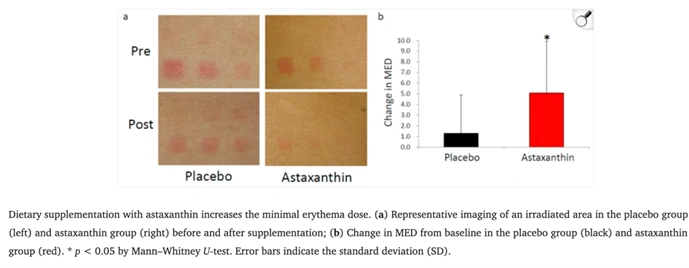
In a 10-week study with healthy adults 6, those taking 4 mg of astaxanthin daily showed stronger resistance to UV damage, with a higher minimal erythema dose (the threshold for sunburn) compared to placebo. They also retained more skin moisture, experienced less transepidermal water loss, and reported improvements in roughness and texture. These results highlight astaxanthin’s ability to act as a natural shield against sun-related aging while supporting hydration and elasticity.
By reducing oxidative stress in skin cells, astaxanthin helps minimize wrinkles, age spots, and dryness—outperforming many common antioxidants in stability and effectiveness. Together, these effects explain why it’s often called the “beauty antioxidant,” offering protection and radiance from within.
While vitamin C brightens and retinol promotes cell turnover, astaxanthin’s unique ability to combat oxidative stress at the cellular level complements these ingredients. Its stability and effectiveness make it stand out in skincare science.
Astaxanthin in Aquaculture & Animal Health
Astaxanthin plays an essential role in aquaculture, where it is widely used as a natural feed supplement. Best known for giving salmon, shrimp, and trout their distinctive reddish-pink color, it directly impacts product quality and market value. But its benefits extend well beyond pigmentation.
Research 7 shows that astaxanthin improves survival rates, growth performance, and reproductive capacity in farmed fish. It also enhances stress tolerance, strengthens immune defenses, and even influences the expression of immune-related genes. Together, these effects lead to healthier populations, higher yields, and more resilient aquaculture systems.
Microalgae such as Haematococcus pluvialis are emerging as sustainable sources of natural astaxanthin, offering an eco-friendly alternative to synthetic pigments. By enriching fish diets with algae-derived astaxanthin, farmers can not only produce more vibrant seafood but also improve nutritional quality for consumers while supporting environmental sustainability.
Future Directions & Market Growth
Astaxanthin’s future looks bright across multiple industries.
● Nutraceutical & Cosmetics Growth: Demand for natural supplements and skincare continues to rise, with astaxanthin at the forefront.
● Preference for Natural Sources: Consumers increasingly favor algae-derived astaxanthin over synthetic alternatives, driving market innovation.
● Research Expansion: Scientists are exploring its potential in chronic disease prevention, anti-inflammatory therapies, and longevity science. As results emerge, astaxanthin could become a cornerstone of preventive health strategies.
Conclusion
Astaxanthin is more than just a pigment; it’s one of nature’s most powerful antioxidants. From protecting human cells against oxidative damage to enhancing beauty and ensuring sustainable aquaculture practices, its versatility is unmatched.
In a world increasingly focused on natural health solutions, astaxanthin stands out as a compound that truly matters—whether in safeguarding human health, elevating skincare, or ensuring vibrant, sustainable seafood. From protecting human cells to coloring salmon, astaxanthin matters everywhere.
Reference
- Yusuf. Aminullah; Naftali, Z.; Damai Santosa; Prajoko, Y. W.; Azam, M.; Susanto, H.; Hertanto Wahyu Subagyo. Boosting Antioxidant Defense: The Effect of Astaxantin on Superoxidase Dismutase and Malondialdehyde Reduction in Patients with Head and Neck Cancer Receiving Cisplatin Chemotherapy. Asian Pacific Journal of Cancer Prevention 2024, 25 (10), 3741–3748. https://doi.org/10.31557/apjcp.2024.25.10.3741.
- Hecht, K. A.; Marwah, M.; Wood, V.; Nishida, Y.; Bach, A. E.; Gerson, J.; Hom, M. M.; Schnackenberg, J.; Sonal Raote; Srivastava, S.; Negi, P.; Caston, E. Astaxanthin (AstaReal®) Improved Acute and Chronic Digital Eye Strain in Children: A Randomized Double-Blind Placebo-Controlled Trial. Advances in Therapy 2025. https://doi.org/10.1007/s12325-025-03125-7.
- Ito, N.; Saito, H.; Seki, S.; Ueda, F.; Asada, T. Effects of Composite Supplement Containing Astaxanthin and Sesamin on Cognitive Functions in People with Mild Cognitive Impairment: A Randomized, Double-Blind, Placebo-Controlled Trial. Journal of Alzheimer’s disease : JAD 2018, 62 (4), 1767–1775. https://doi.org/10.3233/JAD-170969.
- Saeidi, A.; Nouri-Habashi, A.; Razi, O.; Ataeinosrat, A.; Rahmani, H.; Mollabashi, S. S.; Bagherzadeh-Rahmani, B.; Aghdam, S. M.; Khalajzadeh, L.; Al Kiyumi, M. H.; Hackney, A. C.; Laher, I.; Heinrich, K. M.; Zouhal, H. Astaxanthin Supplemented with High-Intensity Functional Training Decreases Adipokines Levels and Cardiovascular Risk Factors in Men with Obesity. Nutrients 2023, 15 (2), 286. https://doi.org/10.3390/nu15020286.
- (1)Djordjevic, B.; Baralic, I.; Kotur-Stevuljevic, J.; Stefanovic, A.; Ivanisevic, J.; Radivojevic, N.; Andjelkovic, M.; Dikic, N. Effect of Astaxanthin Supplementation on Muscle Damage and Oxidative Stress Markers in Elite Young Soccer Players. The Journal of sports medicine and physical fitness 2012, 52 (4), 382–392.
- Ito, N.; Seki, S.; Ueda, F. The Protective Role of Astaxanthin for UV-Induced Skin Deterioration in Healthy People—a Randomized, Double-Blind, Placebo-Controlled Trial. Nutrients 2018, 10 (7), 817. https://doi.org/10.3390/nu10070817.
- Lim, K. C.; Yusoff, F. Md.; Shariff, M.; Kamarudin, M. S. Astaxanthin as Feed Supplement in Aquatic Animals. Reviews in Aquaculture 2017, 10 (3), 738–773. https://doi.org/10.1111/raq.12200.
